
🔵 TREND RADAR #12 :: TECH DRIVERS
+ Access to the 2025 Trend Radar Database

Hi all, this will be the last Trend Radar recap of 2025! But first, a few quick notes:
I thought adding the color-coding dots and [Drivers] to the titles might make it easier to retroactively reference past editions, so I’ve updated the archive and will be testing this title format moving forward. You can access the previous posts, organized by drivers space, at the links below:1
+ I’m now providing all Annual Paid Subscribers access to the entire 2025 Trend Radar Research Database! I’ve cataloged thousands of signals over the past twelve months, which you can search by keyword and filter by category (fashion, food, beauty, etc.) or macrotrend. Learn more about the database here.
Finally, I was hoping to do a few Trend Report Decoders (like this one) for some of the recent 2026 trend reports that have been floating around the internet, but my month got a bit hectic. (My mom had shoulder surgery, send her all of your healing energy!) I could probably get to these within the next week, but I’m curious whether that would be worthwhile, or if I should save them for January? Lmk:
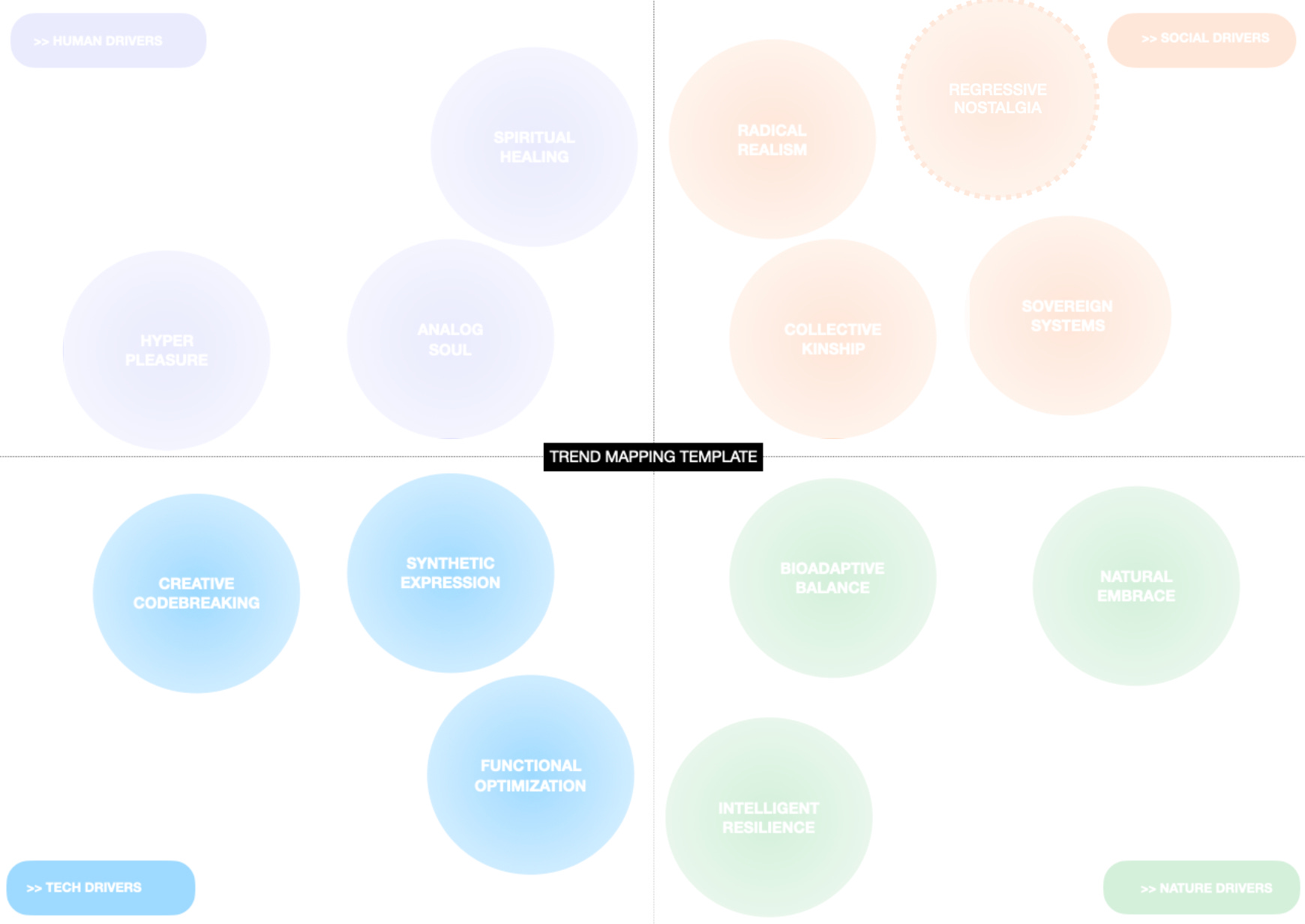
Today’s recap will share a few recent signals from my database that are influenced by the Technology drivers space. This covers three macrotrends: Functional Optimization, Synthetic Expression, Creative Codebreaking.
Functional Optimization
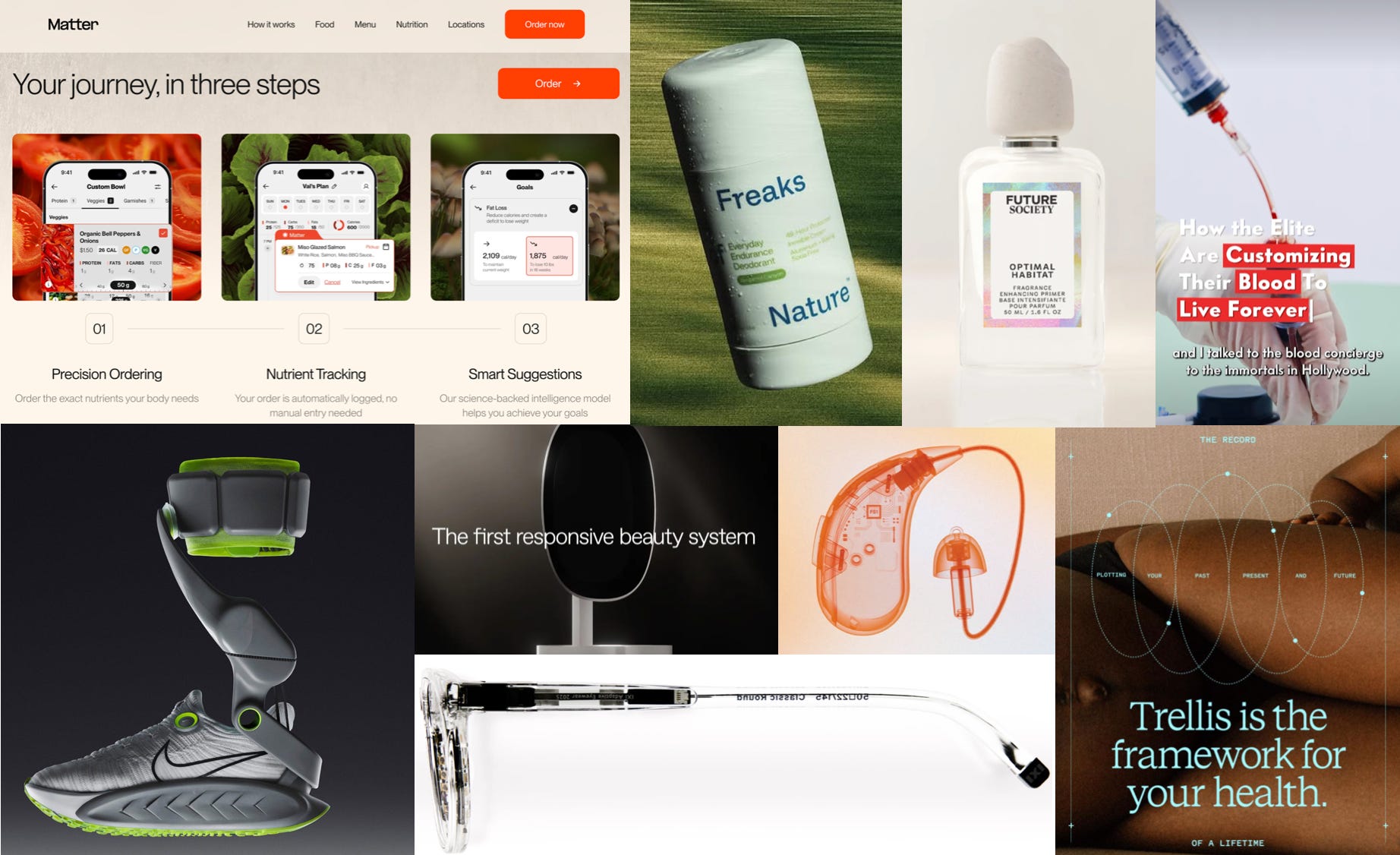
Matter Formula is a new restaurant with an app that includes a portion size slider letting you select the precise portion size of any menu item by number of calories, tapping into the increased popularity of optimized macro counting in protein-centric diet culture. Sweetgreen also added a macro tracking and calculator tool in their app.
Ixi launched “auto-focus glasses” that change optical power depending on where the viewer is looking, featuring “tunable” lenses with “liquid crystal technology” that adjust to the direction of light as it approaches the eye.
AI-powered hearing aid Fortell is ”designed to restore clarity—not just volume.”
Primer is a smart beauty mirror, powered by augmented reality and AI, that maps users’ faces, suggests personalized makeup tutorials, and guides them through makeup application — delivering in late 2027 or early 2028.
Consumers are demanding longer lasting scents, with longevity and performance as a new purchase driver in the fragrance space, leading to the popularity of fragrance primers that claim to extend wear time. Likewise, Freaks of Nature released a high-performance deodorant called Everyday Endurance, offering 48 hours of odor protection.
Indomo brings corticosteroid injections, often used as a quick-fix for acne, into an at-home device that looks like an EpiPen.
Trellis is an AI-powered maternal health platform that consolidates medical data to create a “living blueprint of generational health.”
Flow Neuroscience announced FDA approval of their at-home brain-stimulation device for the treatment of depression; and MemoryTell uses AI to detect cognitive decline (dementia) earlier.
Nike revealed Project Amplify, a “powered footwear system” designed to make running and walking easier — like “an e-bike for legs.” The concept is still in development with a goal to launch commercially in 2028.
Longevity Quest
Dan Frommer’s latest The New Consumer report indicates that 36% of people claim they want to live forever.
Vanity Fair investigated the burgeoning industry around optimizing your blood.
Swim Club offers what it claims is the first “sperm performance formula” targeting male fertility.
The popularity of “longevity” and “biohacking” conversations seems to have unlocked a framing that gives men cultural permission to focus attention on beauty and appearance, with Vogue reporting that UK male beauty sales jumped +77% YOY and US Gen Z men reported increased use of facial skincare from 42% in 2022 to 68% in 2024. GQ explored the role of the “manosphere” influencing rising interest in cosmetic interventions and plastic surgery, while The Wall Street Journal covered the popularity of facelifts among tech bros.
Keep reading with a 7-day free trial
Subscribe to WHAT'S ANU to keep reading this post and get 7 days of free access to the full post archives.