
TREND RADAR #8
Undetectable Face-lifts & Algorithmic Evasion

After this edition of Trend Radar, we’ll have completed a second cycle of scanning the entire framework: all 13 macrotrends across the 4 drivers spaces (Human, Social, Nature, and Technology). If you’re a newer subscriber, I’m curious about what you think of this format — you can fill out this short survey to let me know. Any thoughts, suggestions or constructive feedback would be helpful. Thanks in advance!
Today’s recap will share a few recent signals from my database that are influenced by the Technology drivers space. This covers three macrotrends: Functional Optimization, Synthetic Expression, Creative Codebreaking.
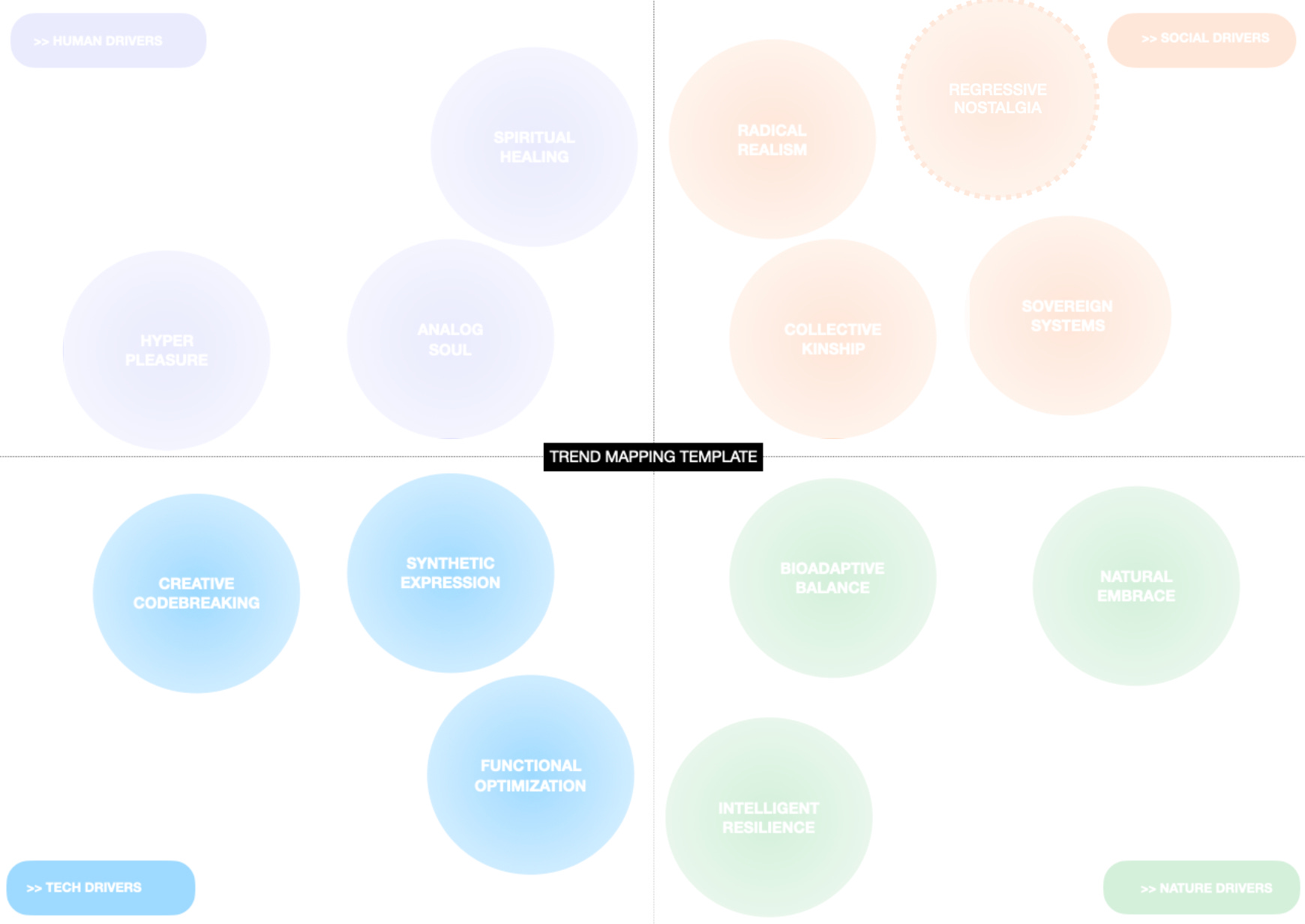
Topics covered below include performance sleep, male beauty standards, the death of social media, workslop, endorphin-triggering accessories, refrigerator advertising and algorithm-cleansing music.
Functional Optimization
Productivity-focused optimization continues. In terms of cultural sentiment over the past couple of months, we’ve seen Silicon Valley embrace ‘996’ work schedules and a broader social media push for “The Great Lock In.”
If you’re working 996, then you don’t exactly have time for anything else. So AI Financial Agents promise to offer financial advice, rebalance portfolios, and execute transactions with efficiency at scale, while Google’s AI-powered Flight Deals tool claims to get you the best price while minimizing effort.
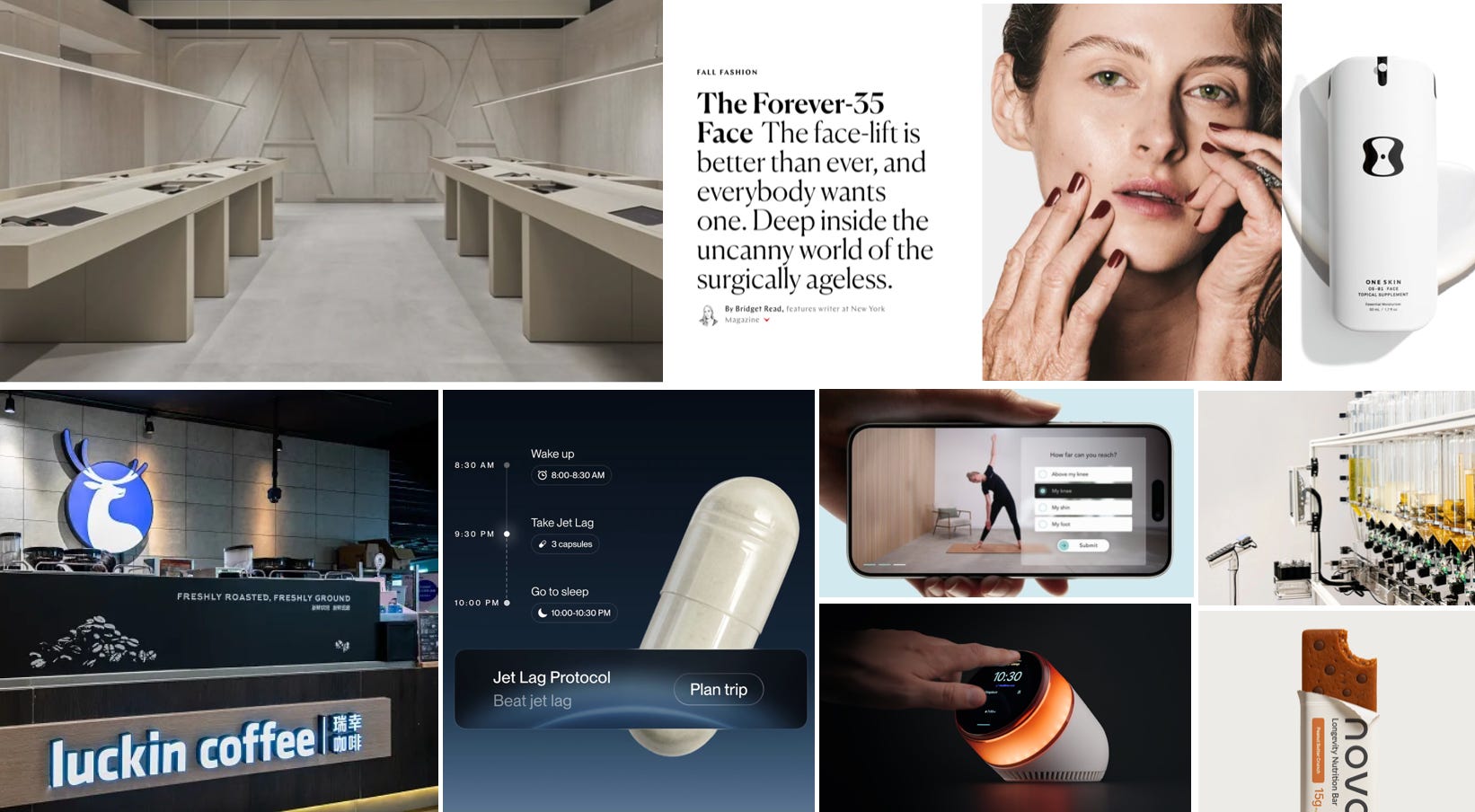
For more efficient retail, an AI Storefront enables zero labor costs: “If the model works, expect high-traffic streets and transit hubs to swap human-run corner shops for autonomous pods that never close, never unionize, and never leak inventory.” Fun! Zara is experimenting with high-tech store formats as well.
In coffee culture, functional optimization means “speed and cost win out over narrative and ambiance.” Reflecting on Luckin Coffee’s recent entry into the NYC scene,
astutely observes that “The U.S. coffee scene has always been a mirror of national character” —The bottomless diner cup reflected abundance and openness. Starbucks reflected globalization and the craving for experience. Third wave reflected craft and discernment. Luckin reflects something else entirely: the relentless pursuit of efficiency in a city that already runs on it.
Are you feeling exhausted yet? This high-performance mentality extends to your sleep habits, too. Ambient unveiled Dreamie, a bedside sleep assistant that “will surface key sleep trends and environmental context to support better sleep habits.” And EightSleep launched Jet Lag Supplement that pair with their app ‘protocol’ to help adjust your sleep schedule while traveling.
There are ways these technologies can be leveraged to bridge gaps in healthcare. In the UK, Boots expanded its home testing kits which enable users to directly add findings to their existing NHS health records. Additionally, a recent NHS pilot of Flok Health’s AI-powered physiotherapy clinic has been proven to drastically cut waiting list times for issues like back pain. LSN Global notes that “the results position AI-run clinics as a scalable model for alleviating healthcare bottlenecks” and helping underserved populations, although “reliance on app-based care could exclude those without digital access.”
Longevity Quest
113 Spring is a new experiential wellness concept in NYC that positions itself around “Cognitive Longevity,” which is an clever framing for, basically, mindfulness. The current offering includes “a neurosensory meditation while wearing a device that tracks the brain’s activity” and an experience to understand how scent impacts the brain. The scent aspect is via Algorithmic Perfumery, a cool AI-powered personalized fragrance concept that I first experienced five years ago at their pop-up at Ace Hotel.
Parsley Health launched Longevity Labs while the UAE announced intent to build “the world’s first longevity and wellness island.”
While the origins of the ‘longevity’ trend were rooted in healthcare and largely driven by Silicon Valley tech bros, the rise of this term over the past decade has paralleled the simultaneous medicalization of beauty. There’s an obvious intersection between 'longevity’ and ‘anti-aging.’ I vividly remember when Allure banned the term ‘anti-aging’ in 2017. Since then, the beauty industry has cleverly rebranded ‘anti-aging’ products with the euphemism of ‘skin longevity’ — so you can embrace aging while still spending $$$ on extending the lifespan of your skin.
has a great overview of how this “twisty talk” has evolved, featuring products like OneSkin’s “topical supplements” (I tried this in 2022 but was unimpressed). As writes, “Pro-aging, cellular senescence, skin longevity, call it what you will, it’s still all anti-aging…Age-shaming is out, but looking young is still very much in” — as confirmed by The Cut‘s Forever-35 Face feature on the “undetectable face-lift.”The key distinction between the old “anti-aging” and the new “skin longevity” might be that men are no longer exempt from the pressures of chasing youthfulness — male beauty standards are evolving, as GQ reports. Earlier this week,
asked, “Are your boys going under the needle without telling you?,” citing recent data from Barclays that found “more young men had had ‘tweakments’ than young women” and “men’s beauty spending rose at nearly twice the rate of women’s.” This is some positive progress in gender equity — once we get that annual beauty spend on par, perhaps I’d consider splitting the check.Also in Feed Me, a recent interview with
confirmed that food and beverage brands are also eager to attract longevity-seeking consumers:Longevity is starting to be picked up by everything from powders, bars, beverages and chips. Other biometrics that are creating buzz in CPG: cortisol and blood sugar. Creatine and colostrum are moving on from supplements to drinks and snacks…Good Idea, which is a brand from Oatly’s co-founder uses an ingredient in their drink that counteracts sugar spikes in your meal, and they can actually prove it works via a glucose monitor like Levels or Whoop…Throne Science is a smart toilet wearable in the US that claims it can tell you about different biomarkers based on your waste, (if you think this is crazy China offers something similar in public bathrooms)…Proof of function is the future, vice versa these wearables will become more influential in what we eat and drink, eventually reflected in the grocery aisles.
Meanwhile, Oura ring sparked controversy by announcing a partnership with Palantir to work with the Department of Defense (this follows fears around wearable surveillance from earlier this summer). And a piece in The New Republic explores if “The One Percent’s Fear of Death is Wreaking Havoc on the World.”
Keep reading with a 7-day free trial
Subscribe to WHAT'S ANU to keep reading this post and get 7 days of free access to the full post archives.